
The Rise of Scams and Fake Reviews in Fintech Frauds

The involvement of technology in finance has changed the way transactions are conducted. Payments are carried out in seconds. Loans are approved through mobile apps. Investments are managed from a dashboard instead of a branch office.
Digital wallets, peer-to-peer transfers, buy-now-pay-later services, and app-based investing tools are now part of everyday financial life. Urban regions have adapted from cash to instant UPI payments.
This kind of growth also attracts the attention of criminals, who are always on the lookout to scam the next investor.
The online financial scams in 2026 are more targeted, automated, and have fake reviews to make them look legitimate. This is not just any form of cybercrime; it is an organized form of fraud on fintech platforms.
The first step to avoid these scams is to understand why they have become a threat in 2026.
Why Fintech Fraud Is Increasing in 2026?
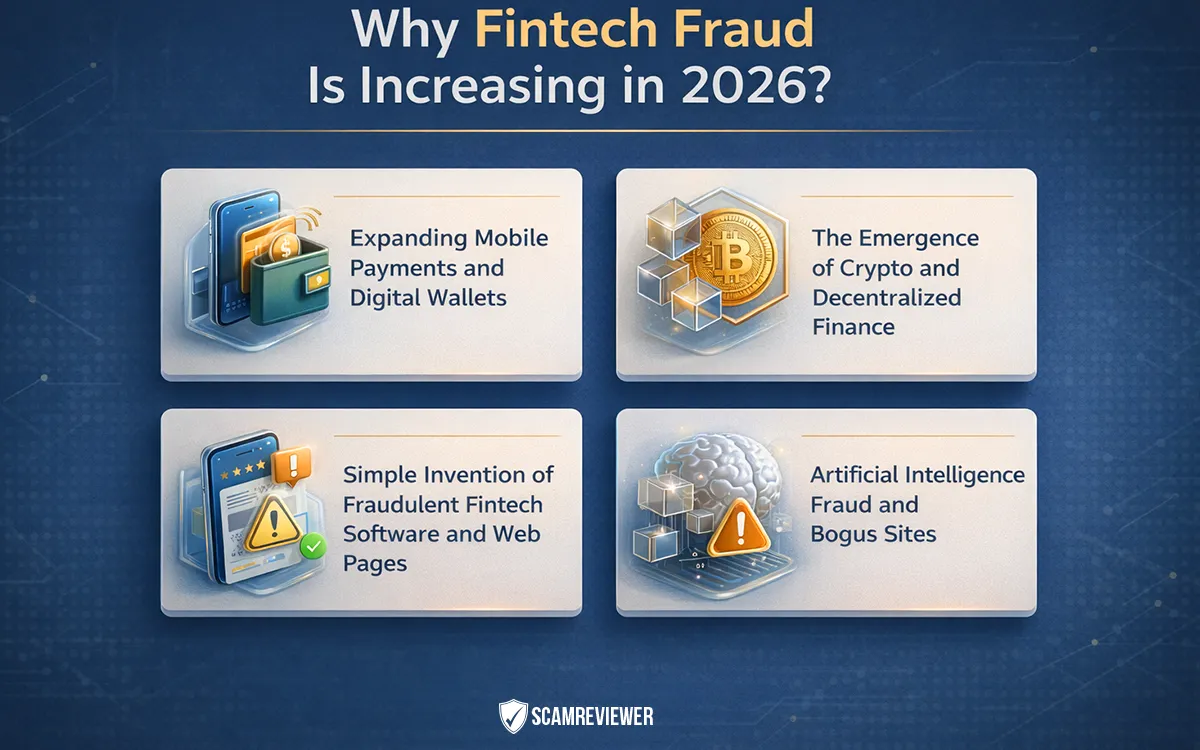
The increase in fintech fraud in the year 2026 is no coincidence. A number of changes in the financial ecosystem have presented digital platforms as targets of attraction.
Expanding Mobile Payments and Digital Wallets
In contrast to traditional banking systems, speed and convenience are the priorities of many fintech services. This ease is why fraudsters use it to set up false accounts, steal credentials, or conduct phishing payments that appear to be valid.
The Emergence of Crypto and Decentralized Finance
Decentralized financial systems exist on an international level, usually with unregulated regulation. Blockchain transactions can be tracked, but they cannot be undone.
Fraudsters introduce counterfeit wallets, duplicate exchange interfaces, and market deceptive tokens. Cryptocurrency is often utilized to perpetrate investment fintech fraud due to the rapid transfers and the lack of options to recover money. Cryptocurrency platforms are also technically complex, which contributes to the increased difficulty for inexperienced users to be confused.
Simple Invention of Fraudulent Fintech Software and Web Pages
It is no longer necessary to have sophisticated technical expertise when it comes to building a convincing mobile app or site. The ability to copy legitimate fintech interfaces in a matter of days is possible using templates, white-label solutions, and AI design tools.
The scam fintech sites are virtually similar in terms of domain names that mislead users into assuming that they are dealing with a reputable provider.
This facade approach makes online financial fraud more successful in 2026.
Artificial Intelligence Fraud and Bogus Sites
Fraudsters have turned to artificial intelligence to create support agents, counterfeit chatbots, advertisements, and even videos of testimonies. The production of fake fintech reviews at scale is also an AI-driven process that allows a fraudulent platform to have a clean image on the streets.
There are several more reasons behind why these scams happen. Here are the most common types of scams noticed in 2026.
Top 5 Fintech Scams in 2026
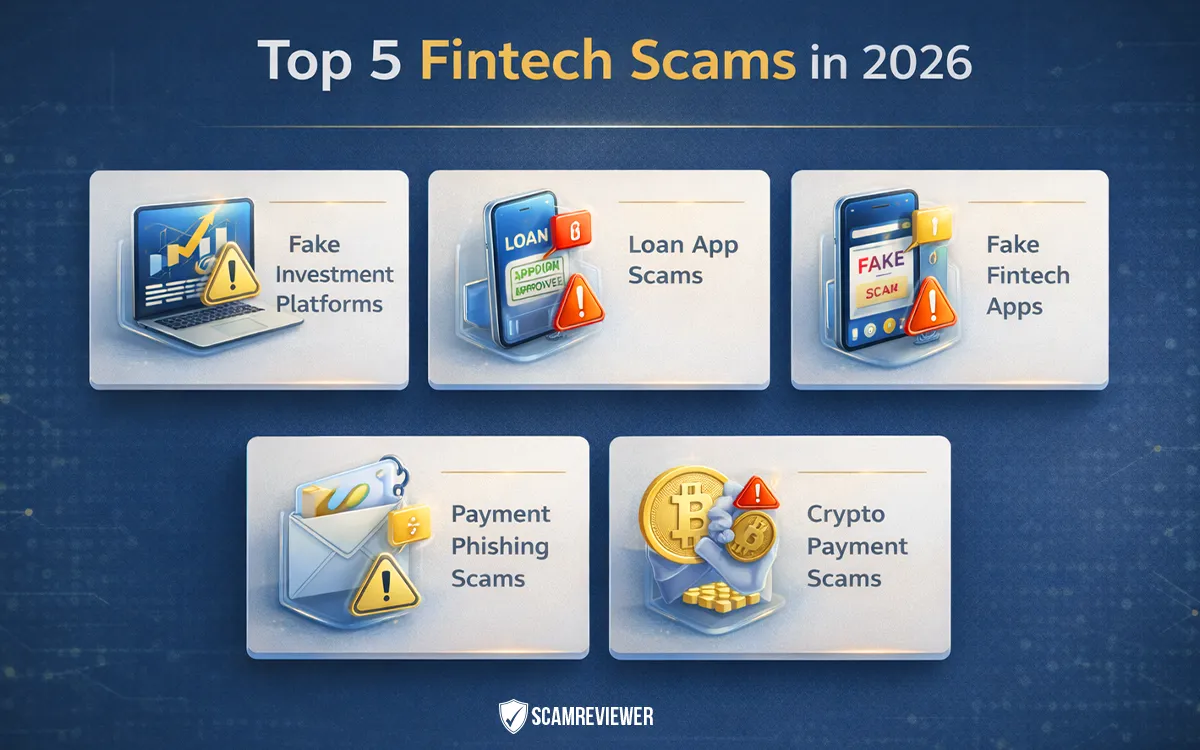
While tactics evolve, certain patterns repeat across regions and platforms. The following scams represent the most common fintech security risks observed this year.
1. Fake Investment Platforms
Fraudulent investment apps are among the fastest-growing digital payment scams.
These platforms promise steady, high returns from forex trading, crypto arbitrage, AI-driven portfolios, or exclusive pre-IPO deals. The dashboards look professional, account balances appear to grow daily, and early withdrawal requests may even be approved to build trust.
Eventually, larger deposits are encouraged. Once significant funds are transferred, withdrawals are blocked. Customer support disappears. The platform either shuts down or demands additional “tax� or “verification� payments.
2. Loan App Scams
Fraudulent apps advertise instant approvals with minimal documentation. After downloading, users are asked to grant access to contacts, photos, and messages. Small loan amounts are disbursed.
Repayment deadlines are extremely short. If payments are delayed, harassment begins. Threats, doctored images, and public shaming tactics are used to pressure repayment. In many cases, personal data is sold or reused for additional fraud attempts.The core objective is data extraction combined with aggressive recovery tactics.
3. Fake Fintech Apps
App stores are flooded with financial tools, making it easier for fake fintech apps to blend in.
Some mimic established digital wallets or investment platforms. Others operate as standalone payment solutions with fabricated brand identities. Malware may be embedded within the app to capture login credentials, SMS verification codes, or biometric data.
Victims often believe they are installing a legitimate financial tool. By the time unusual activity appears, accounts have already been compromised.
The visual quality of these apps makes detection difficult without deeper verification.
4. Payment Phishing Scams
The Phishing Messages notify the recipient that the transaction was not successful, the refund is pending, or the payment link requires confirmation. The link redirects the recipient to a fake login page, which captures the login credentials in real-time. Speed is the essence of this attack. The message generates a sense of urgency, which makes the recipient less likely to read it carefully.
5. Crypto Payment Scams
Fake exchanges and wallets encourage deposits into newly launched tokens. Influencer-style promotions claim limited-time opportunities. After funds accumulate, developers withdraw liquidity, commonly known as a rug pull.
Crypto fintech fraud often combines technical language with social media hype to create artificial legitimacy.
To avoid these scams, it is important to identify the core issue. Read further to know the red flags that are spotted in fintech fraud.
Red Flags That Indicate Fintech Fraud
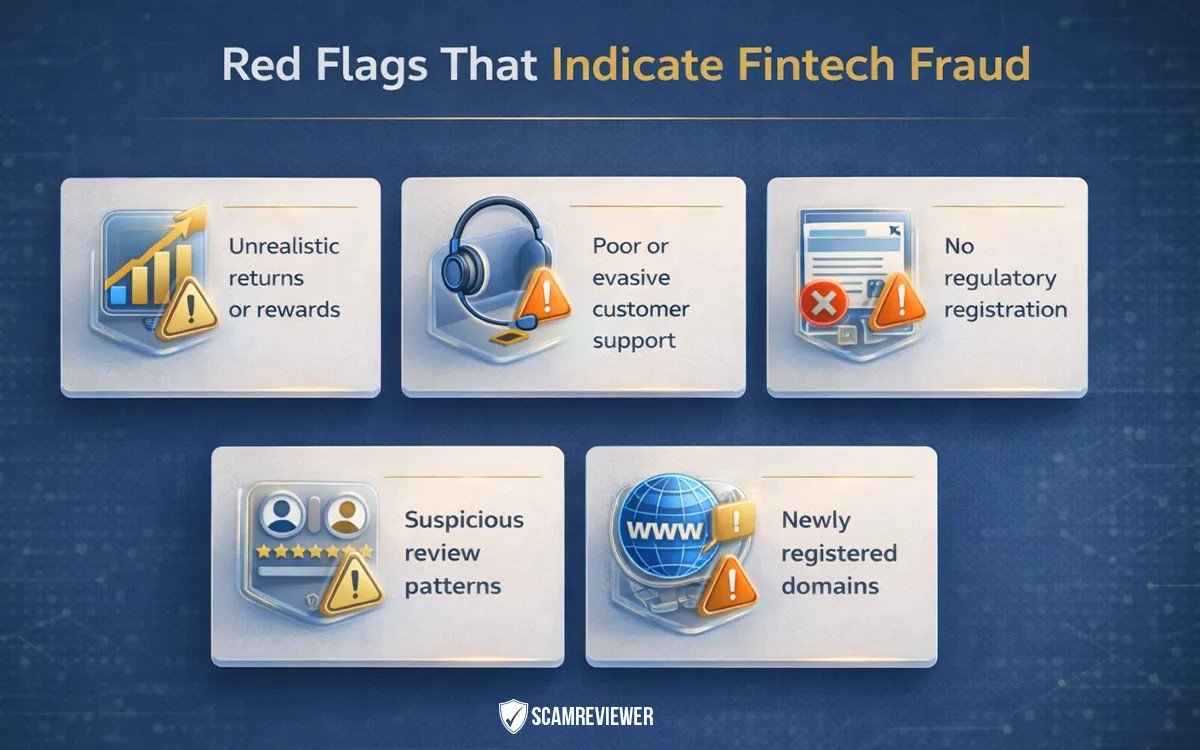
Certain warning signs consistently appear across fintech scams in 2026. Recognizing these fintech scam red flags can prevent significant losses.
- Unrealistic returns or rewards
The promise of guaranteed profits, fixed returns on a daily basis, or high returns on referring people to the platform are red flags for investment fintech scams. In a real financial market, the returns are not fixed. They keep changing. - Poor or evasive customer support
Delayed response, scripted answers, or failure to give verifiable company information may indicate operational risk. Disappearance of support channels after receiving deposit requests may indicate fintech platform fraud. - No regulatory registration
Lack of information regarding licensing or ambiguous claims regarding international standards are a major red flag. Verified fintech providers are open with their regulatory status. - Suspicious review patterns
Large clusters of five-star ratings posted within short timeframes indicate fake fintech reviews. Repetitive wording and generic praise further strengthen suspicion. - Newly registered domains
Scam fintech websites often operate under recently created domain names. Short operational history combined with aggressive marketing is a common fraud pattern. - Limited company information
Missing executive profiles, no physical address, or unverifiable corporate registration details suggest a shell operation rather than a legitimate financial entity.
The objective is simple: reduce skepticism. When a financial app appears highly rated, many assume others have vetted it. In reality, the entire reputation may be manufactured.
To believe in any scam requires a lot of different factors and attempts by the scammer. One such factor is fake reviews.
The Role of Fake Reviews in Fintech Scams
Fake fintech reviews are no longer simple five-star ratings. They are structured campaigns.
Scam apps frequently launch with hundreds of positive reviews posted within days. These reviews mention smooth onboarding, fast withdrawals, and responsive support. The tone often sounds generic but enthusiastic.
Paid review manipulation is common. Organized groups are compensated to post favorable comments on app stores, forums, and social media. Negative reviews are buried or reported to be removed.
Some platforms publish fabricated testimonials featuring stock images and invented success stories. Influencer-style promotions further enhance credibility, even when no actual service is provided.
To check the legitimacy of any brand or platform on trusted sites like Scam Reviewer.
How to Protect Yourself from Fintech Scams
Individual caution is necessary despite the fact that fintech fraud detection systems are getting better.
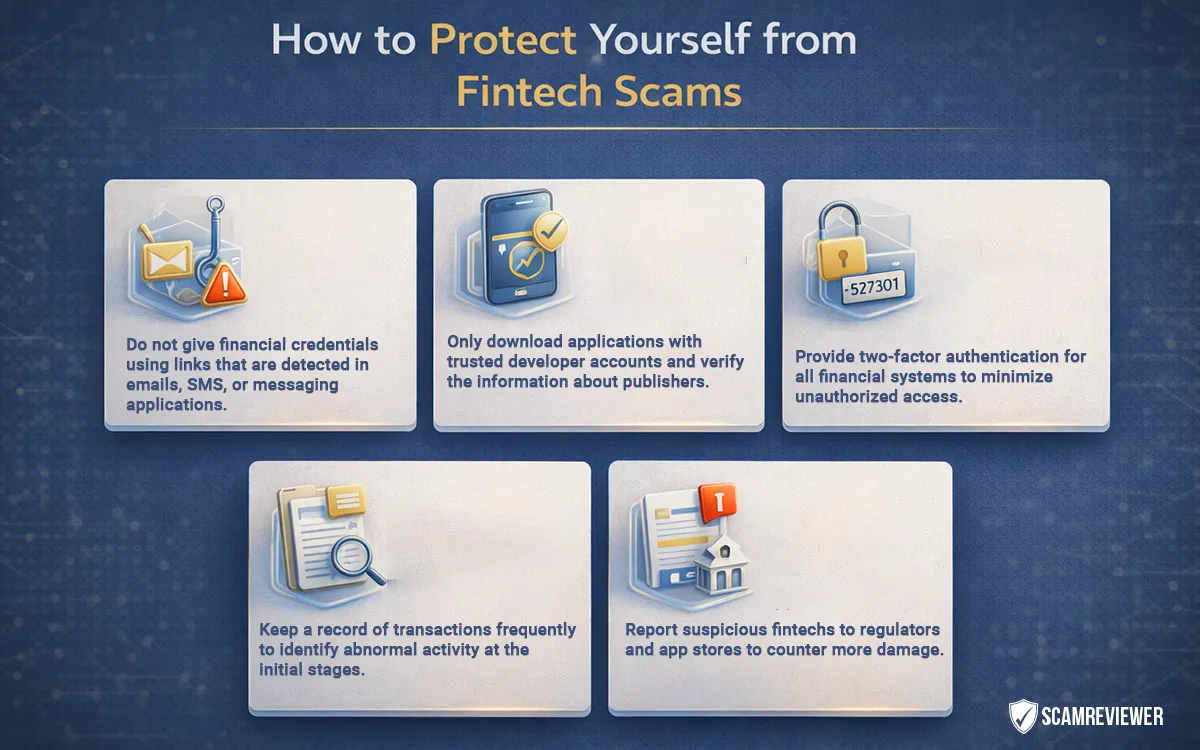
- Do not give financial credentials using links that are detected in emails, SMS, or messaging applications.
- Only download applications with trusted developer accounts and verify the information about publishers.
- Provide two-factor authentication for all financial systems to minimize unauthorized access.
- Keep a record of transactions frequently to identify abnormal activity at the initial stages.
- Report suspicious fintechs to regulators and app stores to counter more damage.
Break when a financial service is pressured to make immediate deposits or to give sensitive information when it is not expected. Rush-based frauds usually depend on a sense of urgency.
Invest Confidently
Financial technology will continue to move forward. New tools will emerge, platforms will expand, and digital transactions will become even more seamless. The real advantage, however, lies in approaching innovation with discipline. Careful verification, consistent monitoring, and informed decision-making create a strong foundation for safer participation in digital finance.
Thorough checks should become routine. Regulatory validation, background research, domain verification, and structured review analysis are not excessive steps; they are standard due diligence in a digital-first economy. Reliable platforms withstand scrutiny. Transparent companies provide verifiable information.
Security habits also matter. Strong authentication, limited data sharing, and regular transaction reviews reduce exposure to unnecessary risk. When financial decisions are supported by research rather than urgency, the likelihood of fraud declines significantly.
Digital finance offers opportunity, efficiency, and access. Those benefits are best preserved through awareness and structured evaluation.
Stay informed. Verify before committing funds. To verify the legitimacy, connect with us at Scam Reviewer.
FAQs
How can I verify if a fintech app is legitimate?
Check regulatory registration, confirm developer identity, review company history, and analyze review patterns across independent sources.
Are loan apps safe to use?
Licensed and regulated loan providers can operate legitimately. However, unverified apps offering instant approval without documentation pose significant fintech security risks.
How can I detect fake fintech reviews?
Look for repetitive language, sudden spikes in positive ratings, generic praise without detail, and a lack of long-term review history.
Why are fintech scams increasing globally?
Rapid digital payment adoption, cross-border crypto transactions, AI-driven deception tools, and low barriers to creating apps and websites contribute to the surge in fintech fraud.