
How to spot and avoid Software Review Scams
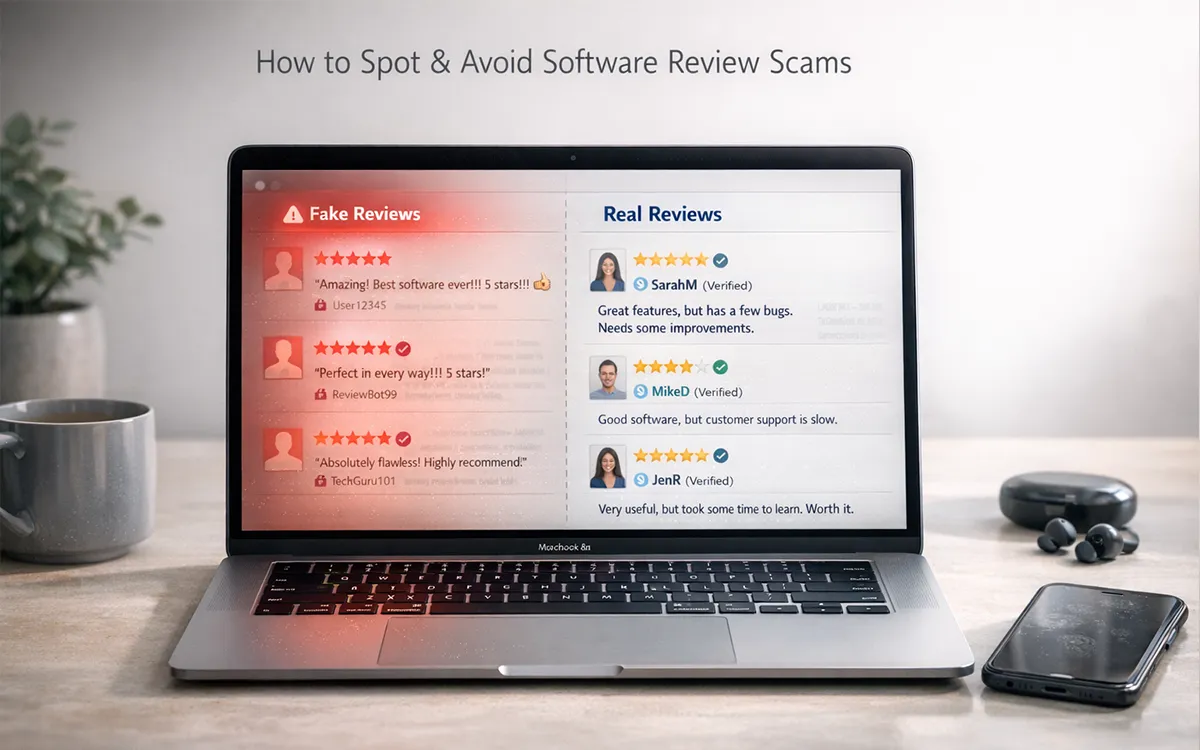
Software marketplaces and SaaS platforms have changed the way people choose tools. Today, most buyers check online reviews before installing an app or subscribing to software.
Some products that have a rating of 4.8 seem like the safest ones. Good ratings and positive reviews make a person believe that a tool is safe and well-known.
But that trust may be delusive.
It is not until after the buyer has paid the money for the software or subscriptions that they will realize that the reviews were not entirely genuine.
With the growth of the SaaS marketplaces as well as the app directories, the issue of software review fraud and fake app ratings is also increasing. There are companies that improve their credibility by writing positive reviews that are fake, and others are attempting to criticize their rivals by writing negative comments.
These activities are sometimes called “review fraud” in the case of software platforms, but they can manipulate software listings and make customers select tools that do not necessarily work the way they represent themselves to do.
This guide will explain how the software review scams are performed, why the fake SaaS ratings may deceive the buyer, the most frequent warning signs that you should pay attention to, and how to identify a reliable software review in real-life and use it to select a tool.
By knowing these signs, you will prevent software listing fraud, as well as reputation manipulation on the Internet.
What Are Software Review Scams?
Software review scams are schemes where businesses or third parties are manipulating ratings, reviews, or feedback to make a product or service seem more reliable or popular than it is.
Such frauds are spreading more and more among SaaS marketplaces, application stores, B2B software directories, and comparison sites.
Due to the reliance of many buyers on the rating and consumer feedback before purchasing a tool, review manipulation has become an effective means of influencing a purchasing decision.
A software review scam, in simple terms, is an online reputation management tool and is used to make a product appear more desirable than it actually is through the use of fake or deceptive reviews.
As an example, one can consider a search related to project management software and a tool with hundreds of positive ratings and positive reviews. On the face of it, it appears credible. However, there are instances when such ratings can be from fake accounts, paid reviewers, or automated bots that are meant to unnaturally increase the product image.
When this occurs, the software that seems rated well may not be a true mirror of what is really experienced by the users.
How Software Review Scams Usually Work
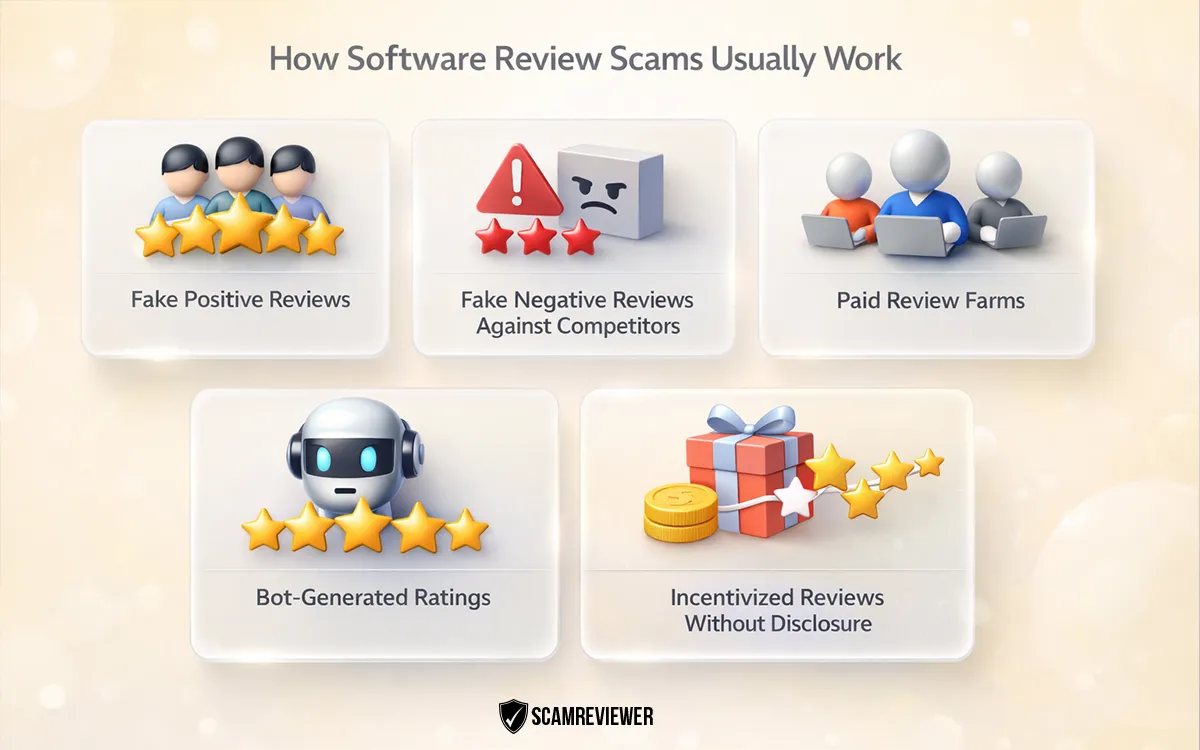 Most software review scams rely on a few common tactics that manipulate how ratings appear to potential buyers.
-
Fake Positive Reviews
Some companies post fake positive reviews on software platforms to increase their visibility in search results and comparison pages.
These reviews typically contain generic praise such as:
- “Excellent tool for businesses�
- “Highly recommended software�
- “Best productivity platform available�
However, they rarely include details about real product use.
-
Fake Negative Reviews Against Competitors
One of the most popular tricks is leaving negative reviews about the software products of competitors.
The rivals can post bad reviews or feedback in order to make a competitor product seem ineffective, and this may affect prospective clients from adopting an alternative product.
-
Paid Review Farms
Some companies hire review farms or freelance reviewers to generate large volumes of positive feedback.
These review farms may produce:
- large volumes of fake reviews
- artificially high ratings
- keyword-stuffed comments
These reviews often appear authentic at first glance but usually lack specific details about real product use. This practice is a growing form of review fraud in software marketplaces.
-
Bot-Generated Ratings
Automated accounts or bots can also be used to create large numbers of ratings within a short period of time.
This tactic can cause a sudden spike in reviews, making new or unknown software appear extremely popular.
-
Incentivized Reviews Without Disclosure
Some companies encourage users to leave positive reviews in exchange for incentives such as:
- gift cards
- free subscriptions
- discounts
- affiliate rewards
When these incentives are not clearly disclosed, they can create biased or misleading software reviews.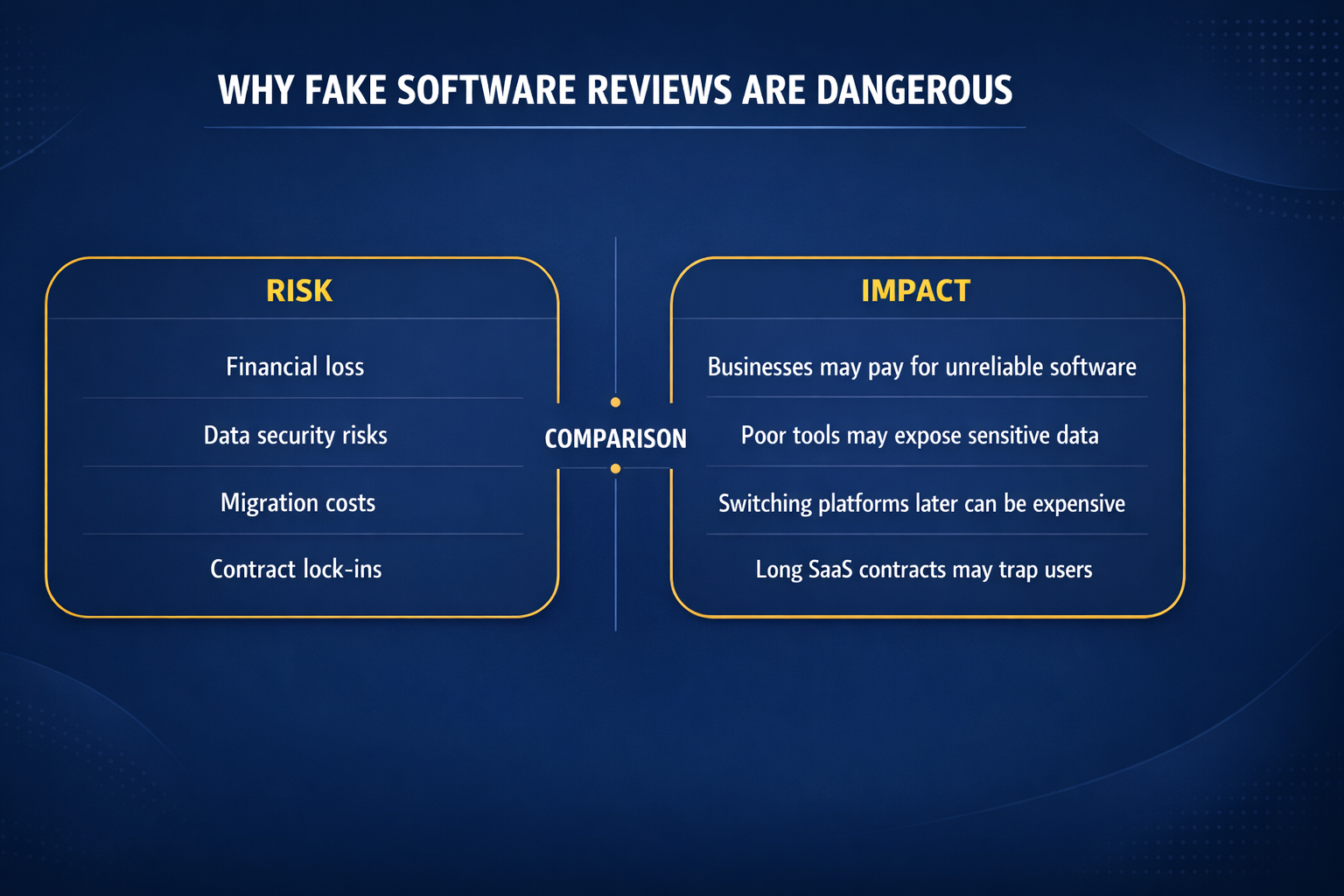 The scams of software reviews use fake reviews and fake feedback to sway the buyers. The most risk-free method is to go beyond star ratings and review trends, reviewer reputation, and third-party sources.
How Fake Software Ratings Manipulate Buyers
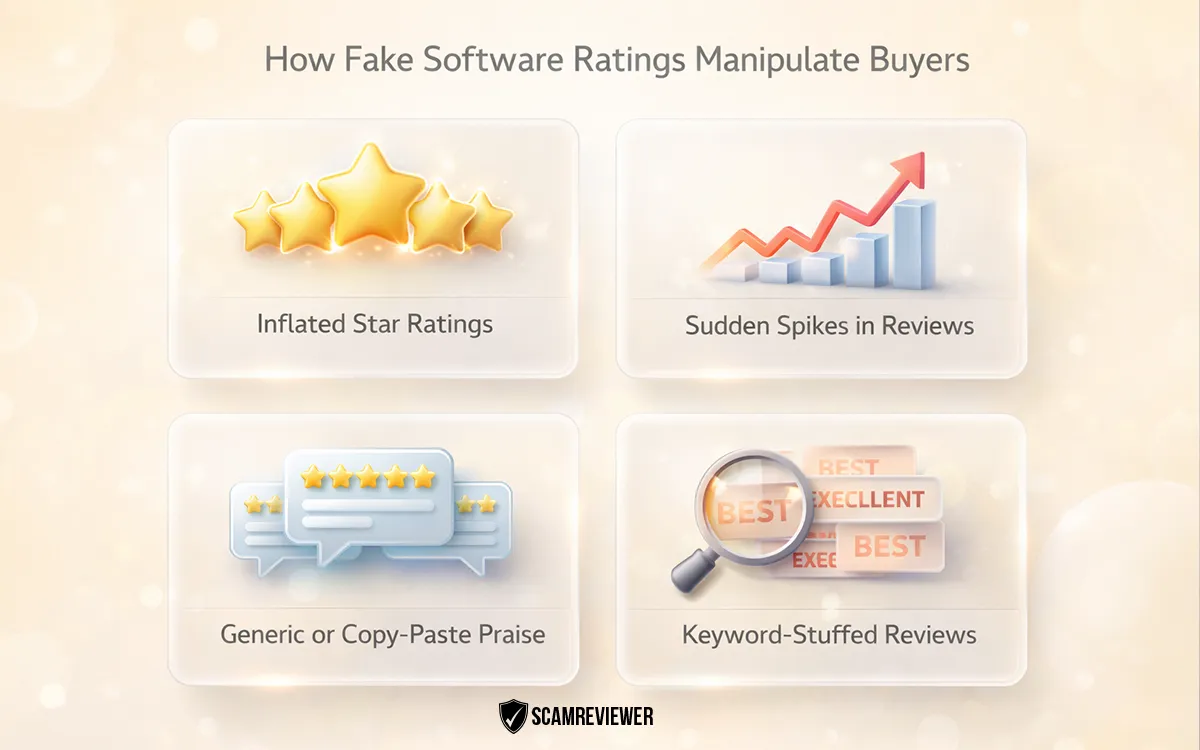 A software product that has thousands of positive answers and a nearly perfect rate can appear highly reliable at first sight. The instinctive thinking of most individuals is that a tool rated 4.8 or 5 stars should be a reliable and popular one.
But this also makes fabricated software ratings and doctored SaaS reviews so effective.
Most consumers are strongly dependent on ratings when they have to compare tools. Once a product is rated highly, it immediately attracts attention and trust, even in cases where such reviews are not supported by the actual experiences of the users.
The following are some of the most prevalent methods through which software review scams scam buyers and drive them to purchase them.
- Inflated Star Ratings
Among the most widespread tricks is the artificial improvement of the overall rating of a software list.
One of the tools may have an average score of 4.8 to 5.0 stars, which gives a feeling that almost all users had a splendid experience.
As a matter of fact, this may occur when firms make up bogus positive SaaS-based reviews or encourage ratings to drive the mean score up. Top scores can easily increase visibility because most buyers use search results filtered by top ratings.
- Sudden Spikes in Reviews
The next red flag is when a product suddenly gets dozens or even hundreds of reviews within a relatively short time.
E.g., after months of minimal activity, a software tool may get 200 glowing five-star reviews in a week. This form of spike can be indicative of coordinated review campaigns, review farms or bot ratings. Natural review growth usually happens gradually as more users adopt the software.
- Generic or Copy-Paste Praise
Fake reviews often lack detail. Instead of describing specific experiences, they tend to use vague phrases like:
- “Great software!�
- “Highly recommended tool.�
- “Best platform for business.�
You may also notice multiple reviews repeating almost identical sentences. This is a common sign of review fraud in software platforms, where reviewers follow a template provided by the company or a review farm.
- Keyword-Stuffed Reviews
Some fake reviews are written to improve visibility in search engines or marketplaces rather than to help buyers.
These reviews may repeat keywords such as:
“best CRM software tool platform solution productivity software�
This type of keyword-stuffed feedback is often designed to manipulate ranking algorithms rather than provide genuine user insight.
Common Red Flags in Software Listings
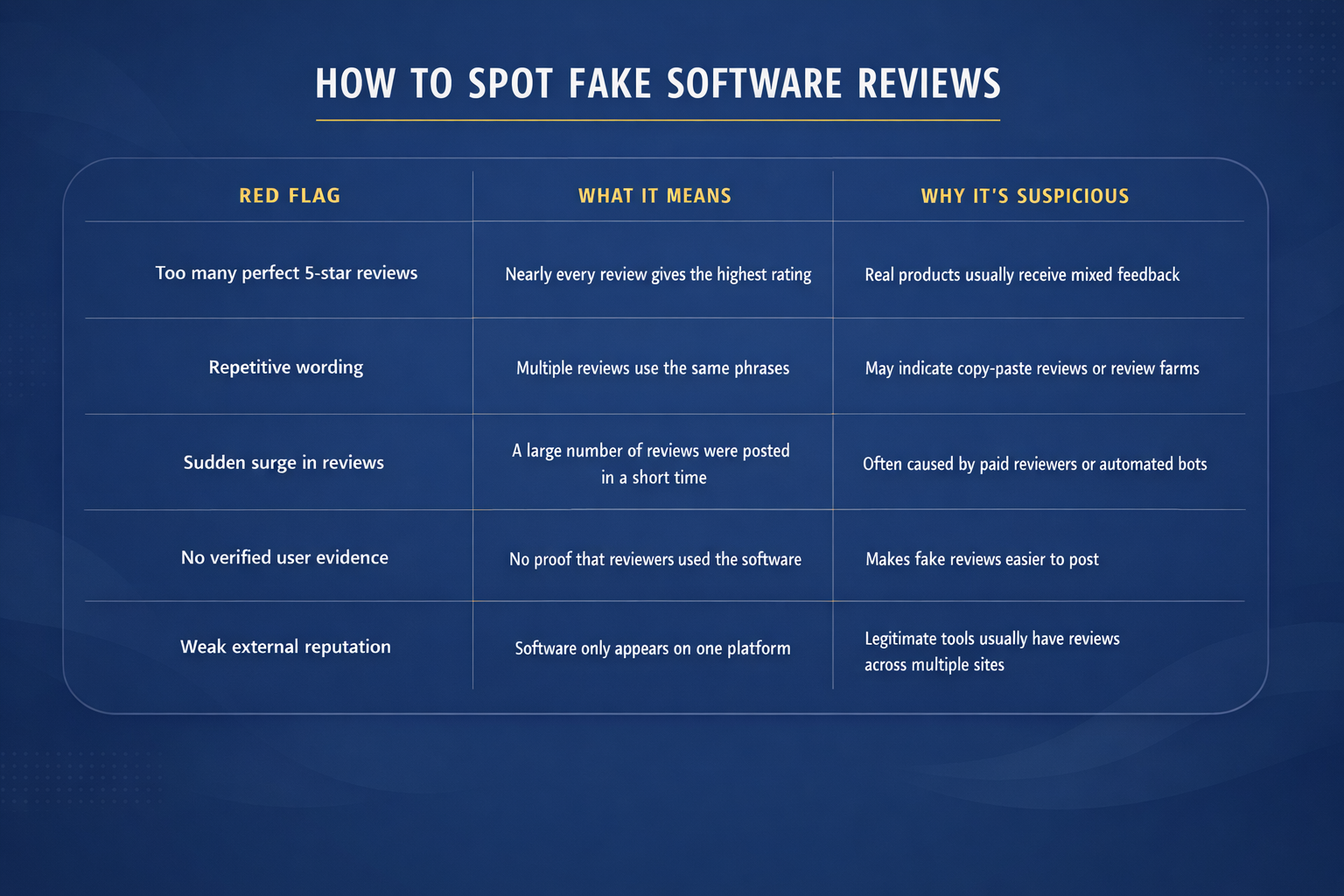 Not all the software tools rated highly are reliable. The software review scams in most of the instances, conceal themselves in the form of impressive ratings and positive reviews.
When considering a SaaS product or software solution, one should also consider looking beyond the star rating and pay attention to possible indicators of trouble.
Below are some of the most common red flags in suspicious software listings.
When several of these warning signs appear together, the chances of review manipulation increase significantly.
1. Too Many Perfect 5-Star Reviews
It is not uncommon to see a couple of five-star reviews. However, when a software listing has hundreds of flawless ratings and very little criticism, it can be questioned.
Actual users tend to differ in terms of experiences with software tools. Some will be fond of some features; some may stake bugs, price, or usability.
When reviews look overwhelmingly perfect, it can indicate:
- fake software ratings
- incentivized reviews
- reputation management campaigns
Authentic software reviews usually include balanced feedback, including both strengths and limitations.
2. Repetitive Wording Across Reviews
Another common sign of fake SaaS reviews is repetitive language.
For example, you might notice multiple reviews using phrases like:
- “Best software solution for businesses�
- “Highly recommended platform�
- “Excellent tool for productivity�
If several reviews use the same wording or structure, they may have been written by the same source or generated from templates.
This tactic is often used by review farms hired to inflate software ratings.
3. Sudden Surge in Reviews
A sudden spike in reviews is another warning sign.For example:
- 100 reviews appearing within a few days
- dozens of ratings posted in the same week
- many reviews were published on the same date
This pattern often suggests coordinated review campaigns or automated bots posting ratings.
Legitimate software usually receives reviews gradually as more people begin using the product.
4. No Verified Purchase or Usage Proof
Some review platforms verify whether a user actually purchased or used the software.
If a platform allows reviews without confirming real usage, it becomes easier for fake accounts to post feedback.
Listings with no verified user evidence may be more vulnerable to:
- fake customer reviews
- competitor sabotage reviews
- automated review bots
This is why verified user reviews tend to carry more credibility, although they are not always perfect either.
5. Weak Reputation Outside One Platform
Legitimate software products usually appear across multiple sources.
For example, reliable SaaS tools often have:
- reviews on independent review websites
- discussions in forums or communities
- mentions in tech blogs or software comparisons
When a product is listed on a single market or review site, it could be a sign of poor adoption or reputation building.
Comparison of feedback among various sources is used to identify the scams of software listing and the manipulation of reviews.
Spotting these warning signs early can help you avoid software review scams, manipulated app ratings, and misleading SaaS listings.
How to Detect Trustworthy Software Listings
It is not always easy to select proper software, as sometimes ratings and reviews are affected. In order not to be tricked by the fake reviews of SaaS or misleading ratings, one needs to look further than the star rating and check the listing more attentively.
The combination of reviews is one of the initial things to verify. Software, in reality, tends to have a variety of feedback. There will be some high ratings by the users, and some might complain of limitations or improvements. When nearly all the reviews are an ideal five-star rating with no complaints, this is perhaps an indication that the reviews are fake.
Reviewer profiles can also be useful to look at. Authentic users usually provide in-depth accounts and describe the way they utilized the software. Suspicious accounts, however, can leave very short reviews, leave reviews on numerous unrelated products, or seem to have been created recently.
A second positive practice is to check the reviews on various platforms. It is reliable software, which can be located on a variety of websites, app stores, review websites, and search engines. When a product has been reviewed ravingly as a “great platform” and is not so popular with others, it may be time to have a closer look.
Even reading the reviews can tell a lot. Real reviews tend to give an account of actual experiences, both positive and negative. Other reviews that simply mention reviews such as “great software,” “highly recommended,” etc., without comments, are not always useful.
Lastly, pause and look at the company that made the software. Reputable providers usually provide transparent information on their business, prices, and customers. Lack of transparency is an indicator at times.
Signs of Trustworthy vs Suspicious Software Listings
| Trustworthy Signs | Possible Warning Signs |
| Reviews include both pros and cons | Only perfect five-star ratings |
| Detailed feedback from real users | Short or generic praise |
| Active reviewer profiles | Anonymous or new accounts |
| Presence on multiple review sites | Reviews appear on only one platform |
| Clear company information | Limited or unclear business details |
Generally, it is more appropriate to consider review trends but not singles. One single review is not going to tell much, yet the same words of numerous users can provide a clearer idea of how reliable the software is.
Spending an additional couple of minutes to analyze these indications may assist you in avoiding manipulated listings and make a more informed selection of tools.
Real-World Impact of Fake Software Reviews
Fraudulent software reviews may lead to actual financial and business issues since online reviews are influential on buying choices. It has been discovered that approximately 71 percent of consumers go through reviews before selecting a product or service.
With hundreds of glowing reviews on a tool, businesses might think that the tool is reliable and spend money on it. As a matter of fact, not all of such ratings might be well-grounded, as they can be based on false reports or bribed reviews. This complicates the process of buyers discerning the software platforms that are trustworthy indeed.
The outcomes may exceed the loss of funds. The companies can find themselves using tools that are not secure, stable, or supported by the customers. It may be costly and inconvenient to replace these systems in the future.
Fake reviews also harm honest software providers. Products promoted through manipulated ratings may rank higher, while legitimate tools lose visibility.
In the end, fake software reviews distort the marketplace. They make weak tools look reliable, hide real problems, and make it harder for buyers to make informed decisions.
Quick Checklist – Spotting Software Review Scams
Before trusting a software listing, it helps to quickly check for common warning signs. Fake reviews often follow recognizable patterns, and spotting these patterns can help you avoid manipulated SaaS ratings.
- Sudden spike in reviews
- Mostly perfect 5-star ratings
- Generic or repetitive praise
- No verified users or usage proof
- Weak reputation outside one platform
Use this simple checklist when evaluating software reviews.
When a few of these red flags are combined, it is better to take a closer look before believing the ratings.
It would be safer to analyze the feedback in detail, verify the reviews on more websites, and learn about the company that creates the software.
Looking Beyond Ratings When Choosing Software
Although a high rating will make one develop a feeling of trust in a software product, a full evaluation is more than that. Because fake reviews and listings are becoming an issue, you should be careful about what you read online. The most reliable source of information is confirmed reviews that represent real-life experiences and are collected through a variety of platforms.
To get a fair idea of a software’s reliability, look for patterns in feedback rather than relying on a single source of information. When trying to get a fair idea of a software’s reliability, it is not just about looking for software with a high rating; you need to look for real-life experiences and credible proof of the software’s performance.
FAQs
Do fake software reviews affect search rankings?
Yes. Reviews often influence how software listings appear in search results and marketplace rankings. Higher ratings and larger review counts can improve visibility, which is why some companies attempt to manipulate reviews to rank higher on comparison platforms.
Can AI-generated reviews appear on software platforms?
Yes. Some review campaigns now use AI tools to generate large numbers of reviews quickly. These reviews may sound natural, but often lack detailed personal experiences or real usage information.
Why do some software reviews disappear over time?
Reviews may disappear if they violate platform policies or are flagged as suspicious. Some platforms also remove reviews during periodic audits when they detect fake accounts or unusual review activity.
What should I check before trusting software reviews?
Before trusting reviews, it helps to check multiple platforms, read detailed feedback, look at reviewer profiles, and research the company behind the software. These steps can help reveal whether the reviews reflect real user experiences.