
Don’t Fall for Smishing: How to Spot & Stop Text Message Scams
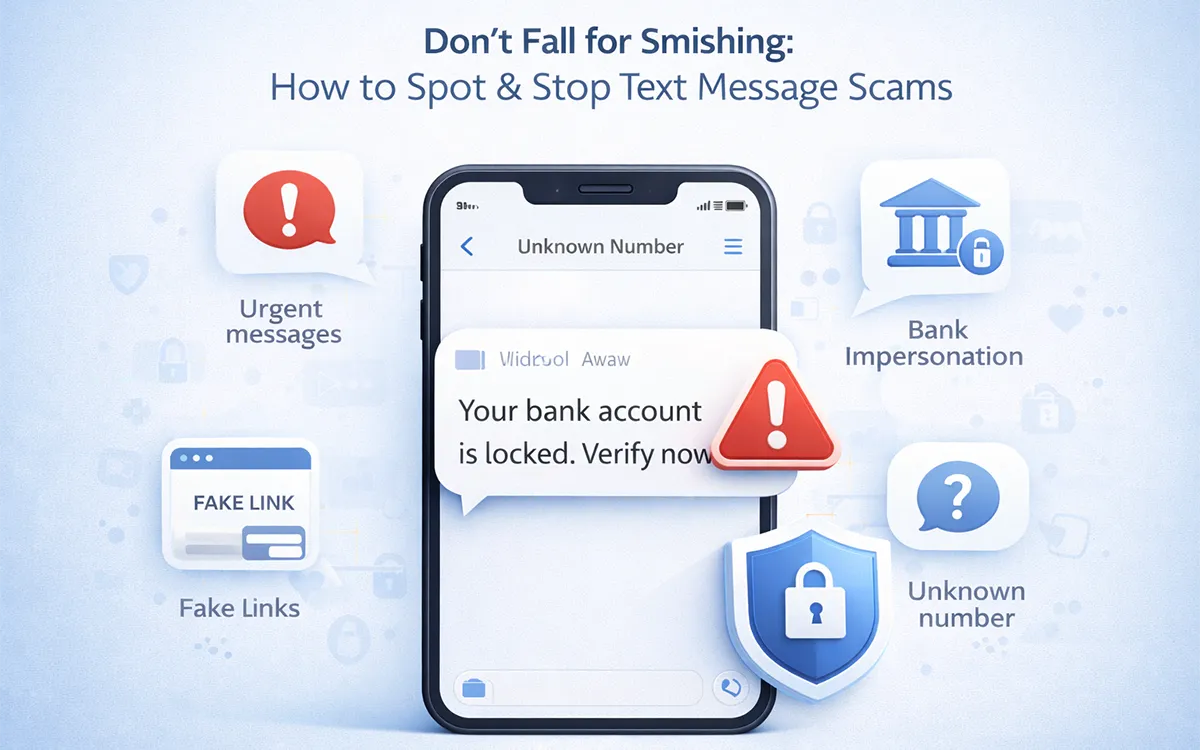
At one time, text messages were seen to be safer than email. That is a trust that is being abused today. In 2026, cybercriminals will need only a text messaging scam as one of the most frequent methods of approaching individuals, with SMS phishing, or smishing, as a technique used to imitate banks, delivery services, applications, and even the government.
These scam messages are designed to feel familiar and convincing. The message about a locked bank account, a delivery problem, or a missed verification request may appear totally convincing at a glance. Hiding behind that message is, however, a vicious link or a call to personal information.
With the rise of delivery scams, fake OTPs, and subscription fraud, knowing the difference between phishing and smishing is now essential for mobile security.
You will know how SMS scams function in an actual sense, why they are on the rise, and how to comfortably identify, counter, and report on suspicious text messages before scammers keep winning.
What Are Text Message Scams (Smishing)?
Have you ever gotten one of those urgent messages, like your package is being withheld or your bank account is being compromised? Chances are, it wasn’t real. These are known as smishing scams, where phishing is applied via an SMS message to steal the information of the users.
The messages usually appear very persuasive. They need not be a bank, a delivery company, or even a government agency. Scammers want to make you fall by urging you, creating fake links, or asking about your personal details.
Online identity theft, stolen money, or hacked bank accounts are some of the problems that a person may fall victim to by clicking on a fake text message or entering their details.
Examples include delivery text scams, fake OTP messages, and subscription alerts. The point is, these scams thrive on your trust and attention. Learning how to identify them forms a significant part of the text scam protection tips.
Common Types of Text Message Scams
While smishing scams come in many forms, most follow the same pattern: urgency, familiarity, and a request for action.
Below are some of the most common types of SMS scams, along with realistic examples and a simple explanation of why they’re dangerous.
| Scam Type | Example Text Message You Might See | What It Is / Why It’s Dangerous |
| Delivery or Courier Scams | “Your package delivery failed. Confirm your address here: tracking-update.xyz.” | Text looks like a shipping update, but links to a fake site designed to steal personal info or install malware. These are very common around holidays or big sale seasons. |
| Bank or Financial Alerts | “Your account is locked. Verify now to avoid suspension: secure-bank-login.com.” | Scammers pretend to be your bank and ask for credentials or OTP codes. Once given, they can drain your accounts. |
| Government or IRS Scams | “You have an unclaimed tax refund. Click here to claim: gov-refund-info.com” | These messages pretend to be official, like IRS or tax refund notices. They steal identity or financial info. |
| Prize or Lottery Texts | “Congratulations! You’ve won a $1000 gift card. Claim now.” | These offer fake rewards to trick you into clicking links that collect your data or money. |
| Subscription or Renewal Scams | “Your Netflix subscription failed. Update payment here.” | Scammers use popular services like Netflix or Amazon to make the message seem real and push you to enter card details. |
| OTP & Verification Code Theft | “You received a code: 123456. Reply with this code to secure your account.” | This trick steals your one-time password (OTP). Once they have it, scammers can break into your accounts. |
| Fake Toll or Payment Requests | “Unpaid toll fee due. Pay now, or extra charges apply.” | Scammers impersonate toll services or government fees to make you enter card info or give up data. |
It is good to understand the nature of scams, but once one knows how the scam works out in practice, it becomes much easier to recognize it.
The majority of the text scams are time-sensitive and emotionally colored. Fear, pressure, or excitement are some of the methods scammers employ to make you act fast without confirmation of the message.
How These Scams Work in Real Life
Most of these fake texts feel super urgent. Scammers try to scare or excite you to make you act fast, without really thinking.
- Like, a text pretending to be from a delivery company might say your package is stuck and wants you to confirm it through a link. That link takes you to a scam site.
- Or, a fake bank alert might say your account is locked, asking you to log in. But it’s just a fake page to grab your bank info and that security code.
- Those messages with prizes or refunds? If it sounds too good, it probably is. Clicking the link could get your identity stolen or give you a virus.
These scams are part of phone phishing and are getting more common since scammers are learning how to fake real texts.
How Scammers Get Your Number
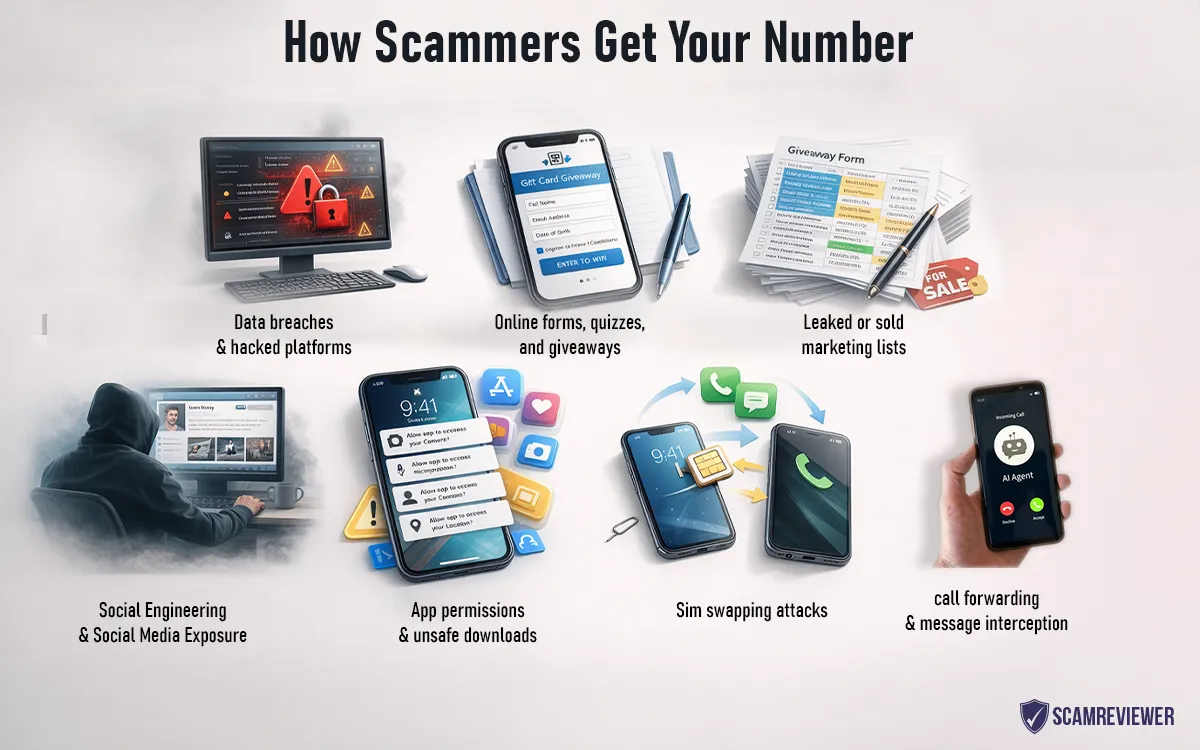 Many people who fall victim to text message scams wonder how scammers could have gotten their numbers to begin with. In most cases, it is through common online activities that many of us don’t think twice about.
- Data breaches and hacked platforms
Phone numbers are usually leaked when websites, applications, or firms are hit by data breaches. The hackers use that stolen information and re-execute it to carry out SMS phishing. That is why scam texts may come even if you did not share your number with a scammer directly.
- Online forms, quizzes, and giveaways
These will often be collected through online forms, surveys, and fake giveaways. Once submitted, the number may be saved, sold, or reused in some future smishing scam. Being careful with where you put your phone number can significantly reduce the amount of unwanted scam texts later.
- Leaked or sold marketing lists
Some marketing databases are poorly protected or shared without consent. Scammers use these lists to send mass fake text messages that appear targeted or familiar. This is why sometimes your name or even location may appear in scam texts, even though the message per se is not real.
- Social Engineering and Social Media Exposure
Many scammers find phone numbers in social media profiles, comments, or private messages. Sometimes, fraudsters simply deceive people into sharing numbers during casual online conversations. Keeping personal contact details private online lowers your mobile phishing exposure.
- App permissions and unsafe downloads
Some applications ask for access to contacts, messages, or call logs. Such malicious apps can secretly collect phone numbers and share this information with scam networks. Reviewing app permissions helps protect the device and reduces the risk of mobile phishing.
- Sim swapping attacks
The fraudsters in SIM swapping scams convince mobile carriers to transfer your number onto a new SIM card in their possession. With this, they can also receive OTPs and reset account passwords. If your phone suddenly loses signal or stops receiving messages, this might be the warning signal you get before falling prey to any such fraud.
- call forwarding and message interception
Some scammers secretly enable call or SMS forwarding; your messages and verification codes get sent to another number. Some of the early warning signs of number hijacking are surprise calls or missing messages.
Fraudsters tend to rely on information disclosed to them, a lack of privacy and trust, and not random guesses. Being aware of these tricks will just make you more alert, besides reducing the risks of being a victim of those text scams.
The second action after being aware of the origin of the scam texts is to know them before it is too late.
The vast majority of text message scams manage to operate only by pushing you to act fast. Being aware of the warning signs will enable you to take time to think and prevent very expensive errors.
How to Identify a Scam Text Message
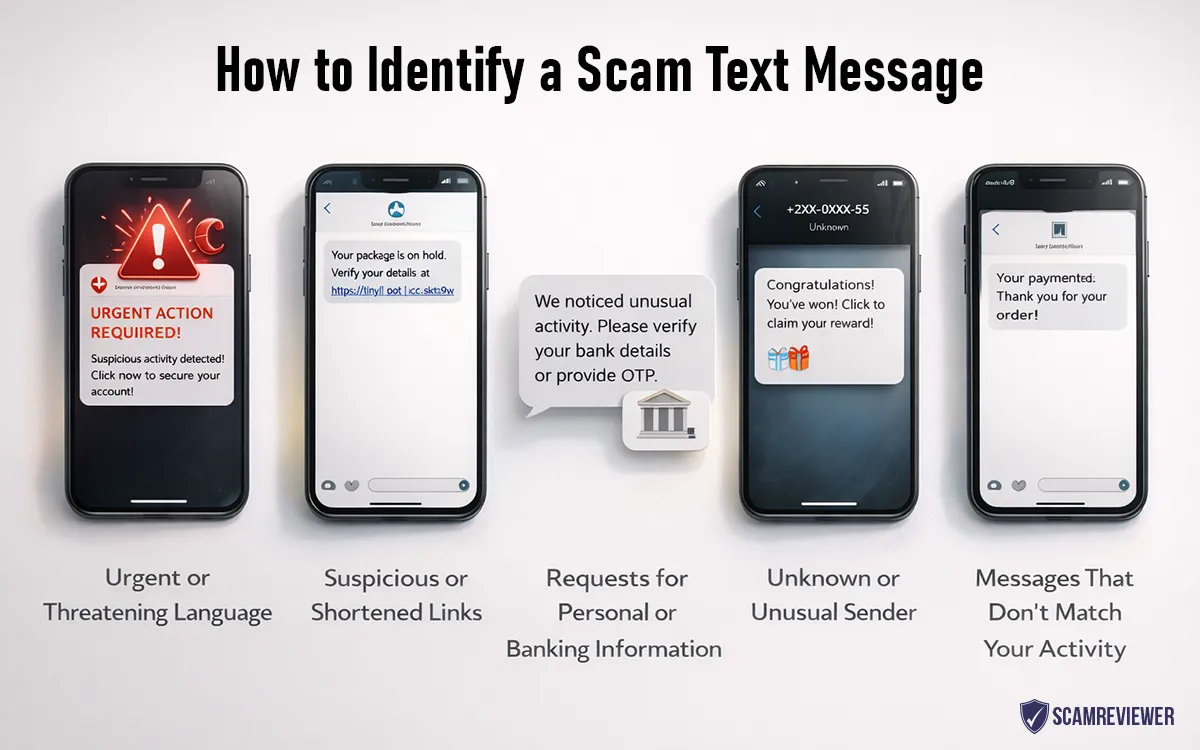 Whenever you get a suspicious message, the first thing you need to do is take time before responding. This is panic, which is what scammers capitalize on.
The majority of text message scams are efficient only when you respond promptly. Being aware of these signs will assist you in taking time, reflecting, and therefore preventing an expensive error.
- Urgent or threatening language
Scammers use urgency to rush you into acting without thinking. When you can spot urgency as a ploy, you give yourself time to verify the message without resorting to an emotional response. This alone can put an end to many smishing scams.
- Suspicious or shortened links
Fake links disguise malicious websites that actually steal your information. Knowing how to identify those suspicious links keeps you away from phishing pages and stops online identity theft before it can even begin.
- Requests for personal or banking information
No reputable company will ever request passwords or OTPs via text. Knowing this keeps you safe from bank SMS fraud and prevents fraudsters from hijacking your accounts.
- Unknown or unusual sender
Scam texts usually come from random numbers or unfamiliar names. Knowing this helps you question messages instead of trusting them automatically.
- Messages that don’t match your activity
It is most likely to be a fake message if you didn’t order anything or ask for a code. This simple check helps in ignoring delivery text scams and fake verification requests.
Even when you know the signs, scam texts can be unnerving, even when they declare that something is urgent. If you ever get a suspicious message, the most important thing is to take your time and not act at once. Scammers rely on panic.
What to Do If You Receive a Scam Text
Getting a suspicious text is, at the least, unsettling, especially when urgent, as it claims. First and foremost, slow down and never act on impulse. Scam texts thrive on panic and quick decisions.
- Do not click links or reply to the email: Most texts of this nature have links that may take you to fake websites or download unwanted software. Even replying might confirm your number is active and lead to more scam attempts.
- Block the sender: Blocking the number stops messages from the same source in the future. It is a simple step, but it reduces the frequency of scam attempts.
- Report the message: Reporting builds a database of active scams for the mobile carriers as well as the authorities. You can forward scam texts to your carrier or report them to the FTC or local cybercrime agencies.
- Delete the text once reported: After blocking and reporting, remove the message from your phone. This eliminates any accidental clicks later.
- Check your phone if you clicked on anything: If you have clicked on a link by mistake, run a check on your device with a trusted security app. Uninstall unfamiliar apps and look out for unusual behavior.
- Lock your accounts: Change the passwords of important accounts and turn on two-factor authentication. This adds protection if some information was exposed.
- Talk to others about it: Sharing your experience helps to protect friends and family. Most people get scammed just because they have never seen it before.
One good habit to follow is opening the official app or website yourself, not by clicking links in text messages. Alone, this would stop most SMS phishing.
Anyhow, it is only good not to become the victim of a scam, and it is even better to develop habits that will help to avoid such in the future. The exposure to the fraudulent SMS messages can be reduced significantly by simple modifications in the way you use your phone, such as allowing the applications to access your phone and making your number public.
How to Prevent Future Text Message Scams
Stopping text scams starts with simple, everyday things. Most phones have spam filters that stop weird texts right away. Turn those on so you get fewer scam texts.
Think about where you put your phone number. Scammers usually get numbers from public sites, online forms, giveaways, and social media. Share less, and you’re less likely to get fake texts.
Teaching people about scams is also key. If your family knows how fake texts work, they can avoid getting ripped off, especially older folks. Keep your phone and apps updated to close security holes before scammers use them.
Use two-factor authentication and strong passwords to keep your info safe. Even if scammers get your number, it’s much harder for them to get into your accounts.
Remember, you’re not the only one fighting these scams. By 2026, phone companies and tech companies will use AI to find and block scam texts before they reach anyone.
The Role of AI and Telecom Providers in Fighting Smishing
Telecom companies play an ever-larger role in stopping smishing scams. Today, AI systems scan millions of messages in real time, looking for suspicious links, fake sender names, and other patterns out of the ordinary.
Spam filters have also gotten smarter. They quickly adapt when new scams start popping up, everything from delivery text scams to fake bank alerts. So, many scam messages get blocked before ever seeing the light of day.
The telecom providers are also working in close coordination with banks and major brands to avoid impersonation. At the same time, many services are moving away from SMS-based verification, hence reducing the risk of fake OTP messages and SIM swapping.
Even with these advances, the awareness of users is still important. Technology helps, but staying cautious remains essential.
When to Seek Help or Report a Scam
In case a message appears suspicious, notify it as soon as possible. By forwarding scam texts to your carrier or reporting them to the relevant cybercrime agencies, you can curb the occurrence of more scams.
Blocking the sender and erasing the message will ensure that the contact is not again. In case you clicked on a link or exchanged information, then you should lock down your accounts as soon as possible and scan your device. Whistleblowing serves others as well. A single report is capable of stopping that scam in the case of thousands of users.
Why One Careless Click Can Cost More Than You Think
Now, text message scam is a normal occurrence on the internet. False delivery notices, bank warnings, and verification messages are very realistic and urgent. Listening, activating phone built-in protections, and knowing how to act can significantly reduce your exposure.
In case of doubts, it is better to check messages by official apps or websites and report suspicious actions. One of the most powerful protections is awareness. The faster you act, the less damage will be done to your finances and personal matters.
FAQ’s
How can I tell if a text message is fake?
Fake texts often use urgent language, suspicious or shortened links, unknown senders, poor grammar, or requests for passwords or verification codes. Checking for these signs helps prevent SMS phishing and mobile phishing attacks.
Are text message scams getting worse in 2026?
Yes. Scammers are using AI, look-alike domains, and sophisticated smishing scams to trick users. Staying alert, using text scam protection tips, and reporting suspicious messages are essential.
What should I do if I click on a scam text link?
Close the page immediately, do not enter any information, run a security scan, and change passwords. If banking or payment details were involved, contact your bank. Reporting the scam helps prevent others from being targeted.
Can scammers hack my phone through text messages?
Yes. Some scam texts contain malicious links or malware that can compromise your phone. Avoid unknown links, verify messages through official apps, and keep your device security up to date to prevent fake text messages or bank SMS fraud.