
6 Ways to Spot a Mobile Payment App Scam: Stay One Step Ahead

Every day, mobile payment apps are used by millions of people worldwide to make transfers, pay for services, and shop online. These apps have changed the entire process of transaction handling into three aspects: fast, safe, and very convenient. The downside of this increased usage is the emergence of new avenues of attack for cybercriminals.
The Mobile payment scams are getting more frequent, and they are using the methods of fake payment links, impersonation texts, and phishing, which are very disguised and therefore, should be taken very seriously as they are worryingly realistic. Criminals manage to get people’s trust, use the factor of urgency, and employ technology to deceive individuals into disclosing personal information or even sending money.
The understanding of how these scams work is crucial, especially as digital payments are on the rise. In this blog, the focus will be on ways to identify mobile payment scams that are already proven, the uncovering of fraudsters’ tactics, the mentioning of real-life cases, and the imparting of the most helpful methods to keep your money and data safe from getting into unauthorized hands.
What Are Mobile Payment Apps?
Mobile payment applications, which are referred to as mobile wallets, UPI wallets, or peer-to-peer transfer apps, are electronic systems that enable users to make instant money transfers and also receive the same through their mobile phones. These applications provide users with the ability to keep card information, connect bank accounts, make instant payments to sellers, both online and over-the-counter, by just scanning the QR code, etc.
These applications depend on state-of-the-art technology such as NFC (Near Field Communication), QR codes, tokenization, and real-time payment interfaces to guarantee quick and reliable transactions.
Key Features of Mobile Payment Apps:
- Connect various bank accounts or debit/credit cards
- Use biometric or PIN for secure access authentication
- Access to transaction history and real-time payment alerts
- Merchants’ connection for QR code scanning and in-app purchases
- Security enhancements such as encryption and fraud detection monitoring are among the features
Benefits of Using Mobile Payment Apps
Mobile payment applications have revolutionized the money management system, thus creating a situation where financial transactions are faster, easier, and more rewarding than never before. The following are the reasons why such apps are used by millions on a daily basis:
- Quick, frictionless transactions – Transfer of money is done instantly without the necessity of cash.
- 24×7 availability – Payments can be done at any time, in any place, and just by a few taps.
- Lower transaction costs – Many applications provide free or inexpensive transfers as compared to traditional banks.
- Digital record keeping – Every transaction taken place is logged with slips for simple tracking and visibility.
- Rewards and cashback – Users are often the ones to benefit from the offering of promotional incentives, cashback offers, and loyalty points.
Usage & Trends in Mobile Payment Apps
- The losses resulting from global payments fraud are estimated to be more than US$362 billion throughout the period from 2023 to 2028.
- It is anticipated that APP (Authorized Push Payment) frauds in significant regions will amount to US$7.6 billion by the year 2028.
- Digital payment fraud is on the rise in India —high-value cyber fraud cases increased by more than 400 percent in FY2024, leading to losses of about US$ 20 million.
- UPI fraud has seen a growth of 100% from ₹573 crores (FY 2022–23) to ₹1,087 crores.
- The UPI ecosystem has fueled India’s rise to nearly 50% share of the global instant payment volume, which illustrates both its enormity and insecure nature.
Threats & Risks Arising from Mobile Payment Apps
While the mobile payment apps have become increasingly popular, hackers have also become more sophisticated in their ways of getting into these systems.
Apart from the incredible ease of use that these platforms provide, they also come with a whole new set of security issues and attack paths. The following are some of the most typical threats and risks that come with mobile payment apps:
- Social engineering & phishing – Fakers lure users into giving away personal or financial information through impersonated messages, emails, or phone calls.
- Rogue or fake apps – Misleading applications that are made available through unauthorized APKs or unofficial app stores may collect user data and even look like the original payment apps.
- QR code “quishing” scams – Fraudulent QR codes would lead the users to unsafe sites where their sensitive information would be captured (The Guardian).
- Deepfake and AI-based impersonation – Cybercriminals are using AI-generated voices or pictures to commit synthetic identity fraud.
- Account takeover – Intruders seize control of accounts by obtaining SIM cards, OTPs, or login details.
- Invisible overlay & malware attacks – Malicious software that is covertly implanted on a mobile device can track a user’s keystrokes or display a counterfeit payment screen.
- Insider or merchant collusion – Untrustworthy merchants or insiders could deceive customers or mishandle stored payment data.
What Is a Mobile Payment Scam?
A mobile payment scam is where the fraudsters deceive users into making or authorizing illegitimate transactions through a mobile payment app.
One prevalent kind of fraud is Authorized Push Payment (APP) fraud, where the users are deceived into sending the money to the fraudsters by misrepresentation (e.g. fake investment, posing as a legitimate person).
The deceivers take advantage of the trust, swiftness, and carelessness of the user to make the transactions appear authentic.
Types of Scams in Mobile Payment Apps
| Type of Scam | How It Works | What to Watch Out For |
| Fake app/clone app | Fraudster builds a lookalike app and lures you to install via share links or adverts | Check developer, reviews, permissions |
| Phishing via SMS/email | You receive a link that leads to a fake login or OTP capture page | Check sender, URL domain, and avoid clicking unknown links |
| QR code redirection (“quishing”) | Fake QR codes redirect to malicious payment pages | Only scan trusted QR; verify URL header |
| Social engineering/impersonation | A fraudster pretends to be a bank, support, or someone you trust | Always independently verify identity; never share OTP |
| Overlay/malware attacks | A hidden overlay makes fake screens appear over your real app, capturing info | Use a trusted antivirus; restrict app installs |
| Authorized Push Payment (APP) fraud | You are tricked into authorizing payment to the scammer | Be wary of “urgent requests” or emotional triggers |
6 ways to Spot Mobile Payment Scams
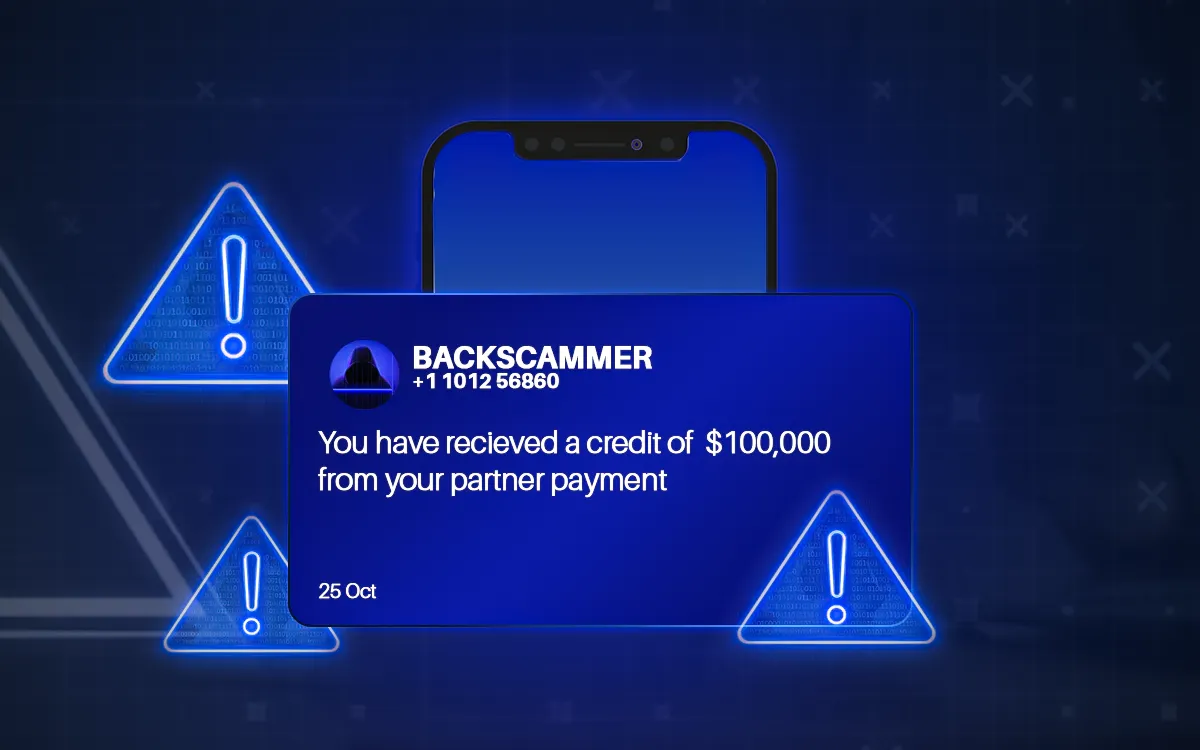
Being able to identify mobile payment scams will help you avoid incurring huge financial losses. Con artists are continuously inventing new ways of cheating, but still, the majority of dishonest practices have some signs in common. Below are six indicators that you should never ignore:
-
Uninvited demand for payment or urgency
In case a person reaches you and says that your account will be cut off unless you “pay immediately,” it is a typical pressure tactic. Real companies will never push you or intimidate you to make fast payments.
-
Mismatch in sender identity or domain
Always verify the origin of the communication. If an SMS, email, or message claims to be from your bank or a payment service but comes from an unusual number or a misspelled domain, it’s probably a scam.
-
Requests for OTP, PIN, or 2FA codes
The legitimate financial apps or banks will never demand your OTP, PIN, or two-factor authentication codes. By sharing them, the scammers get complete access to your account.
-
Suspicious or excessive app permissions
While installing a mobile payment app, check the permissions that it is requesting. Apps that need SMS reading, screen overlay, or accessibility access that is more than what is required are a sign of a scam.
-
QR code or link directs to a different page or URL
Fake QR codes or shortened URLs are commonly utilized by scammer’s in order to send you to a phishing site. Never enter your credentials or payment details before checking the URL first.
-
Overwhelmingly attractive deals or cashback notifications
Be careful with communications that are offering incredible cashback, refunds, or rewards for just clicking a link. These are usually traps to collect your personal and financial data.
How to Avoid Mobile Payment Scams?
Adhering to established security protocols is essential for safeguarding financial transactions and personal data. The following practices are recommended to mitigate risks associated with digital payments.
- Download applications exclusively from official sources such as the Google Play Store or Apple App Store. Refrain from installing software via third-party links or unverified APK files.
- Before installation, verify the application’s developer and review its user ratings and feedback. The frequency of updates can serve as an indicator of ongoing security maintenance.
- Activate enhanced security features, including biometric authentication (fingerprint or facial recognition) and two-factor authentication, for all financial applications.
- Safeguard all one-time passwords (OTP), personal identification numbers (PIN), and two-factor authentication codes. Financial institutions will never request this information. Disclosure of such details grants unauthorized access to accounts.
- Inspect website URLs for “HTTPS” and validate domain names prior to submitting any payment information.
- Exercise caution when scanning QR codes. Utilize only the integrated scanner within a trusted payment application and avoid unknown or unsolicited codes.
- Maintain the current operating system and application software. Regular updates address security vulnerabilities and protect against emerging threats.
- Consider installing a reputable security or antivirus application to identify potential malware, phishing attempts, and malicious links.
- Independently verify any unsolicited communication, such as phone calls or messages, through official channels before disclosing personal or financial information.
- For high-value transactions, confirm payment details through a secondary, verified communication method, such as a direct phone call to a known and trusted number.
- Remain informed on current cybersecurity threats, including mobile wallet scams, phishing techniques, and online payment fraud trends. Continuous awareness is a critical component of digital security.
What to Do If You Have Been Scammed?
In the event that you suspect that a financial scam has transpired, instant and unhesitant measures should be taken to lock your accounts and restrict the loss of money.
- Stop any and all communication with the party that is suspected to be involved in this scam right away. Do not, under any circumstances, give out personal or financial information.
- Reset the passwords, PINs, and security questions of all the accounts that have been affected, along with the associated financial applications. If possible, deactivate the service that has been compromised for the time being.
- Get in touch with your bank or payment company right away and notify them about the unauthorized transactions. Ask them to make your accounts safe, and adhere to their fraud reporting practices.
- Lodge a formal complaint with the relevant cyber crime department, local police, or financial regulator. Often, an official report is a prerequisite for carrying out further investigations.
- Collect and keep safe all the proof related to the incident. This would comprise chat screenshots, transaction IDs, emails, and info regarding the account to which the funds were sent.
- Regularly check all of your financial accounts and credit reports for any odd or unauthorized activities during the weeks and months following the incident.
- Let your friends and family know about the scam so that they will be alert. That can help stop the fraudsters from widening their circle through your connections.
- Depending on where you live and what has happened, you might look into ways to get your transaction undone, chargebacks, or suing. Speak to your bank or a lawyer to know what options for remediation are open to you.
Prevention Tips & Best Practices
Security measures taken beforehand are the mainstay for the safety of your financial assets and personal data. Following these methods strictly makes it very hard for criminals to engage in fraudulent acts.
- Verify Sender’s Identity: Before replying, make sure that the communication that you did not ask for is genuine.
- Secure Your Device: Use the strongest security that your device offers, such as biometric locks or a very secure PIN.
- Enable Transaction Alerts: Make sure that notifications are on for every financial transaction so that you will be aware of the activity immediately.
- Maintain Software Hygiene: Don’t miss to update the operating system and applications of your device frequently as that is the way to get rid of the security loopholes.
- Use Official Applications: Only download from the official app stores and do not install applications from unknown sources.
- Exercise Link Caution: Do not click on links that come to you via unsolicited text messages or WhatsApp.
- Assess Offers Critically: Should offers that seem too good to be true be presented to you, treat them with caution.
- Implement Layered Security: Use several authentication layers, like combining 2FA with biometrics.
- Audit App Permissions: Regularly check and control the permissions that you have given to the apps you installed.
- Prioritize Continuous Education: Make it a habit to consult reliable sources about online security periodically so you can stay informed of the new threats.
Maintaining Vigilance in a Digital Financial Landscape
The benefits of mobile payment applications are beyond doubt, but at the same time, they present a complicated list of security issues. The fraudsters keep on changing their tricks, and the digital finance passive attitude is no longer enough. A security spot is always as strong as the last measure; thus, proper application of layered defense is the way to go, and among the actions involved are: thorough contacting and apps verification, available security features’ tactical use, and user education commitment.
In the end, it is always a matter of time before the hackers who want to steal your money will be able to do so. The digital security mindset, together with the adoption of these security protocols as a daily routine, turns you from a possible victim into an informed and tough user. The protection from security threats is shared between the provider and the user; your watchfulness is the key element that makes the whole system immune to hackers and financial fraud.
Can you reverse a payment if it’s a scam?
Unfortunately, once a mobile payment is authorized, it is often difficult to reverse because most apps process transactions instantly. However, contact your bank or payment provider immediately. They may be able to freeze the transfer or help you file a fraud complaint. Report the incident to the cybercrime portal (https://cybercrime.gov.in/) or local police as soon as possible.
What are the warning signs of a fake or malicious payment app?
Some red flags include:
- Apps are not available on official stores like Google Play or the App Store.
- Unusual permissions, such as access to messages or contacts.
- Poor grammar or fake reviews.
- Promises of "instant cashback" or "bonus rewards" for downloading.
- Always check the developer’s name and read user reviews before installation.
How can I protect myself when using payment apps?
- Only download apps from official sources.
- Enable two-factor authentication (2FA) and biometric locks.
- Never share your OTP, PIN, or passwords with anyone.
- Regularly monitor your transactions and enable instant payment alerts.
- Avoid scanning unknown QR codes or clicking suspicious links.
Are all payment app requests safe?
No. Even if a message or request looks authentic, always verify the sender through official customer support channels before acting. Scammers often impersonate banks, delivery agents, or friends to trick you into transferring money. When in doubt, do not respond or click. Always verify first.