
Software Subscription Scams You Should Avoid in 2026
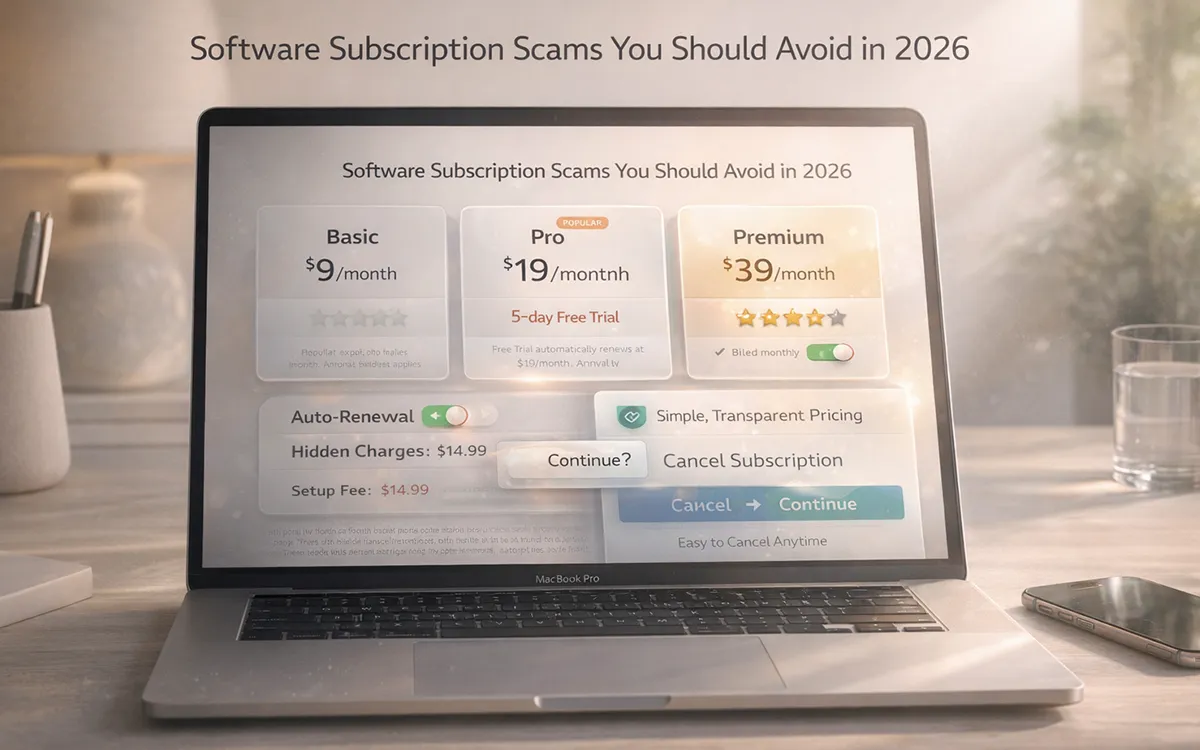
What appears as a mere software subscription now will turn into an expensive sham tomorrow without much ado. Since productivity applications and stock exchange software, subscriptions are now a regular aspect of the online world.
This growth has, however, also enabled scammers. Subscriptions are another aspect of fraud that people employ to generate fake platforms, misleading trials, and hidden billing traps that deceive unscrupulous users.
Subscription scams are increasingly becoming advanced in 2026. Using realistic websites, automated payment services, and AI-generated marketing, fraudulent software services may seem extremely legitimate; thus, it is all the more important that users remain suspicious. To further understand such scams, the question that ought to be answered is why they are on the rise, especially in 2026.
Why Subscription Scams Are Rising in 2026
Subscription scams are rising alongside the rapid growth of digital services and recurring payment models. The global subscription economy is projected to grow by over 200% between 2022 and 2026, increasing the risk of misuse through deceptive practices such as free trial traps, hidden fees, and unauthorised renewals. As more consumers rely on automated billing, fraudsters are exploiting these systems with increasingly sophisticated tactics.
At the same time, scam methods are evolving with technology. Industry reports show a sharp increase in AI-driven and highly advanced fraud attacks, particularly across sectors like online media, dating platforms, and financial services. In the United States, consumers reported losing over $12.5 billion to fraud in 2024, according to the Federal Trade Commission, reflecting a significant rise in digital and subscription-related fraud losses. These trends highlight how financial risks are growing in parallel with the expansion of digital spending and online services.
Common Types of Subscription Software Scams
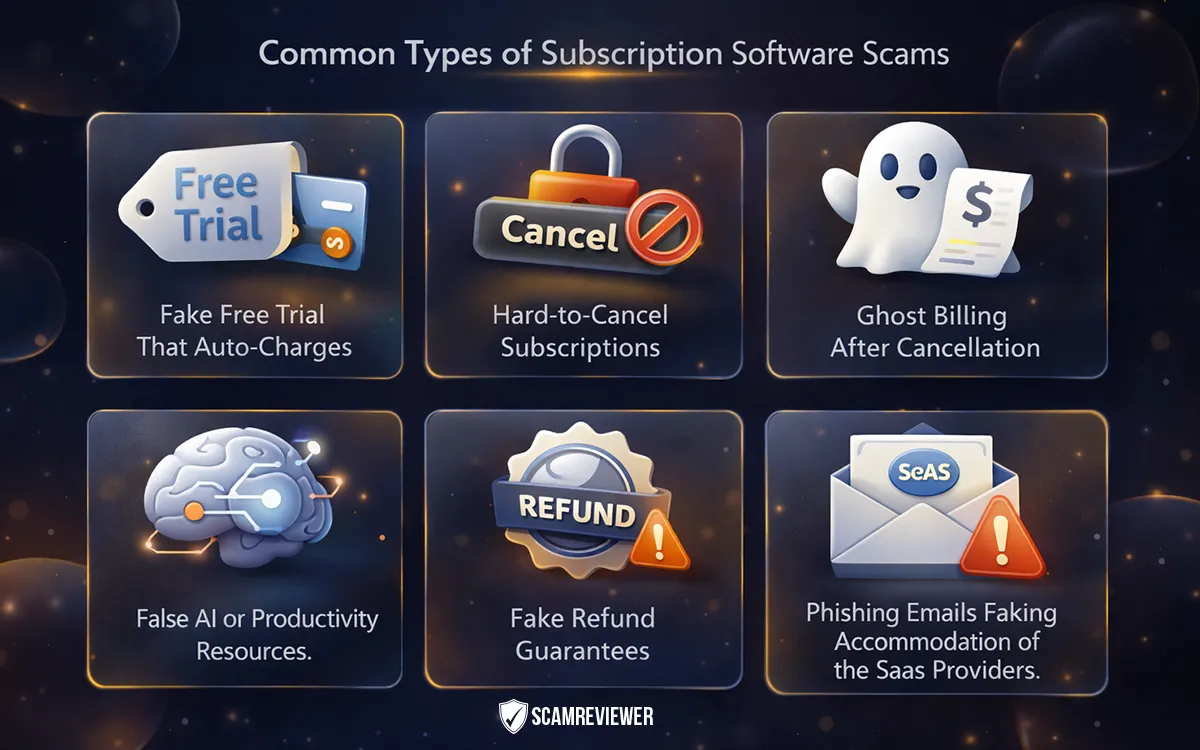
Fraud schemes in subscription software are getting sophisticated and difficult to spot. Most of these scams are intended to appear as valid SaaS systems, yet they are actually aimed at trapping users into paying for unwanted services or having their financial details stolen. The common types of subscription software scams are:
1. Fake Free Trial That Auto-Charges
One of the most common tactics is the fake “free trial.” Users are encouraged to sign up with no upfront cost, but hidden billing terms automatically convert the trial into a paid subscription. Often, there is no reminder before the charge is processed, leaving users surprised by unexpected deductions.
2. Hard-to-Cancel Subscriptions
There are certain fraudulent sites that purposely complicate the cancellation. No cancel option can be visible in the dashboard. The users are diverted to a series of interminable email responses or chatbots, which never fulfil the request. Customer support in most scenarios is non-authentic or inept.
3. Ghost Billing After Cancellation
In certain scams, charges continue even after a user receives confirmation of cancellation. These unauthorised recurring payments may continue for months unless carefully monitored. Many victims only discover the issue after reviewing bank statements closely.
4. False AI or Productivity Resources.
As scammers grow more and more addicted to artificial intelligence tools, they develop copycat websites that replicate popular software platforms. These bogus applications use stolen testimonials, fake numbers of users, and inflated functions to make them look legitimate as they steal subscription charges.
5. Fake Refund Guarantees
Other fake websites offer a 30-day money-back guarantee to gain trust. But after payment is done, the requests for a refund are not considered. Email messages remain unresponded to, and support desks cease their replies.
6. Phishing Emails Faking Accommodation of the SaaS Providers.
The other threat on the increase is phishing emails, which appear to be genuine renewal notices. These alerts inform users of a pending loss of subscription or subversive payment and lead them to counterfeit websites. Leaving login/payment information on such sites may result in identity theft or unauthorised charges.
Being aware of these widely used schemes can assist users in recognising the warning signs early enough and not fall into the trap of the expensive subscription.
Red Flags of Subscription Software Scams
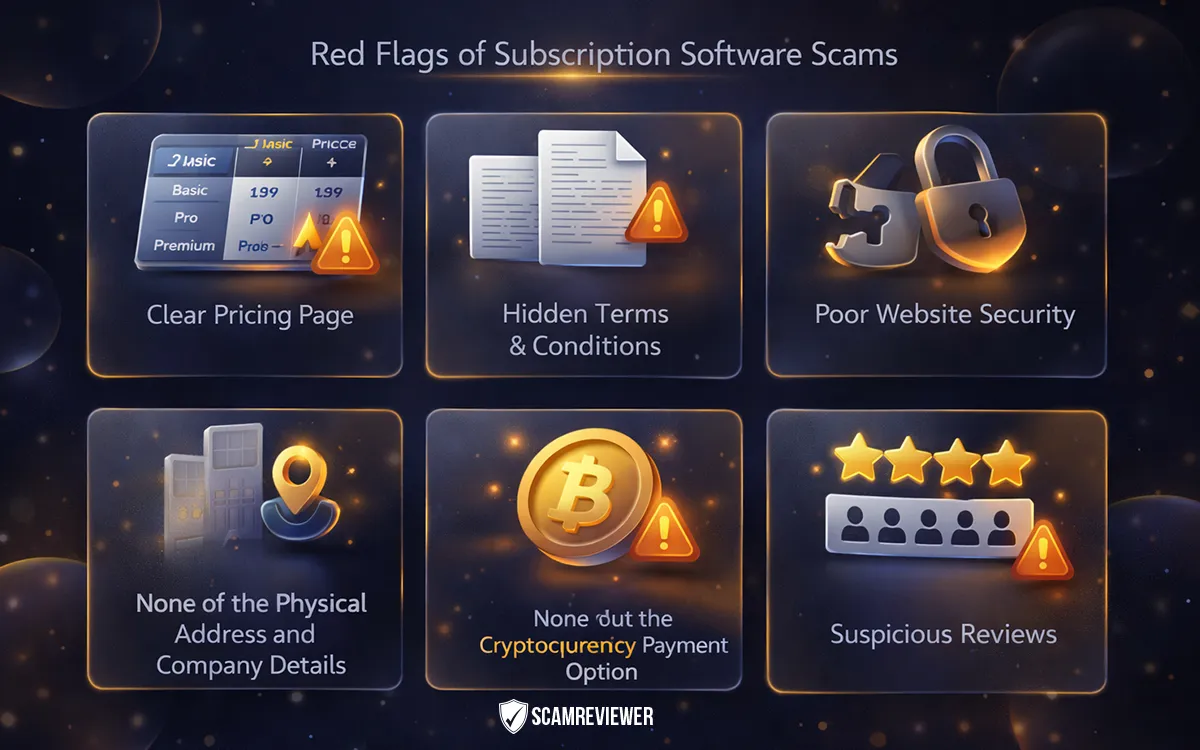
Subscription software scams often reveal warning signs if you look closely. No
Clear Pricing Page
Authorised SaaS sites have obvious pricing schemes. When a site conceals prices or only discloses them when a person signs up, it can be an indicator of bad omen.
Hidden Terms & Conditions
The scam websites usually conceal the significant billing information in complicated or hidden terms. High fees, automatic renewals, and hard-to-cancel policies are typically fine-printed.
Poor Website Security
The absence of HTTPS encryption, broken pages, or old design elements can be an indication of a fake or a rushed site. Safe sites put strong emphasis on the security of user data.
None of the Physical Address and Company Details
The legitimate companies usually have verifiable contact information, such as a business address and customer support information. Absence or absence of information about the company is a significant warning.
None but the Cryptocurrency Payment Option
When the subscription service accepts only crypto payments, this makes it riskier. Cryptocurrencies are more difficult to undo, and fraudsters take advantage of this fact.
Suspicious Reviews
Excessive positive feedback of a similar nature or those that do not have a previous history can be an indicator of counterfeit testimonials. Never trust reviews on external sites and subscribe.
Early detection of such red flags may assist you in preventing repeating billing pitfalls and losses.
How to Protect Yourself from Subscription Fraud
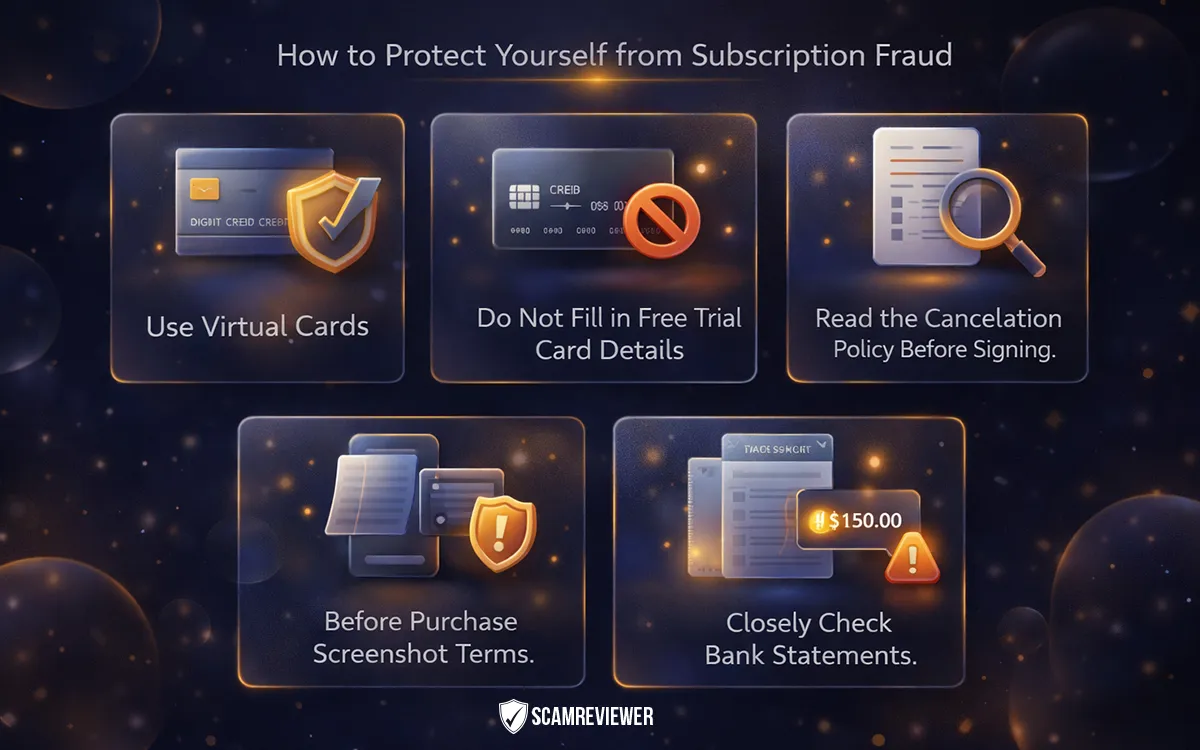
Since subscription fraud is increasingly becoming more sophisticated, preventive measures must be taken. There are a few basic measures that can go a long way in helping to avoid falling into the recurring billing traps.
Use Virtual Cards
Virtual cards will provide protection. The cards give you the advantage of having a limit on how much you spend or having the card deactivated at ease, minimising the chances of repeated, suspicious debits.
Do Not Fill in Free Trial Card Details
Always watch out when a free trial has to be paid up front. Where possible, select trials that do not involve the use of card details or use a temporary payment method.
Read the Cancellation Policy Before Signing
The cancellation terms should always be reviewed. A clear and easy-to-follow process should be ensured before signing up for a subscription.
Before Purchase Screenshot Terms.
Before paying, take screenshots of pricing, terms of refunds, and the subscription. This record can be used in case of billing disagreements in the future.
Closely Check Bank Statements.
Test your bank and credit card statements. Quick dispute of unauthorised transactions can easily be done by early identification of the unfamiliar charges.
These are the protective measures to be practised to avoid scams. In case you think you are trapped in such a scam, do read further to know what you should do next.
What to Do If You’re Already Scammed
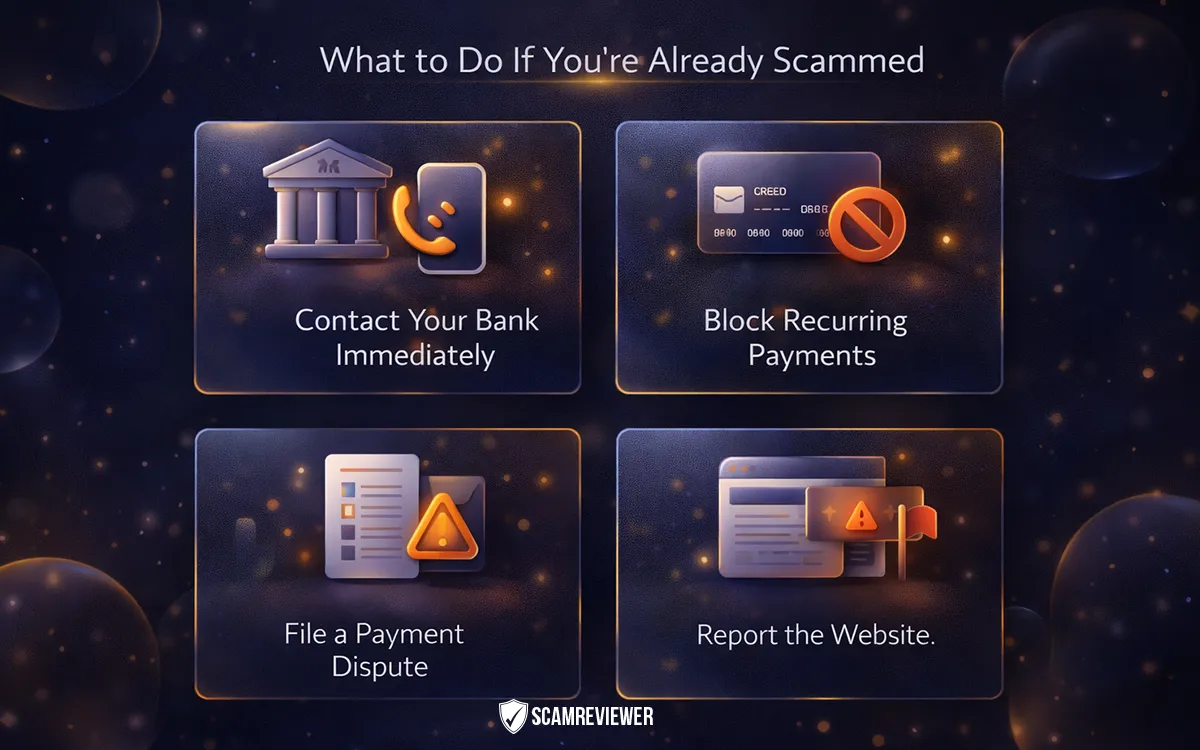
If you realise you have been targeted by a subscription software scam, act quickly. Immediate steps can help limit financial damage and prevent further unauthorised charges.
Contact Your Bank Immediately
Inform your bank or card provider as soon as you notice suspicious charges. Early reporting increases the chances of stopping pending transactions.
Block Recurring Payments
Ask your bank to block or cancel any recurring billing linked to the fraudulent service. You may also request a new card to prevent future charges.
File a Payment Dispute
Make a formal dispute with unauthorised transactions. You should offer the screening, emails, and any evidence of cancellation to prove it.
Report the Website
Submit the fake site to the consumer protection office, the cybersecurity organs, or the payment gateway provider. This will assist in avoiding being victimized by others.
Always ensure that you view the credibility of any new software before you subscribe to it. Websites like Scam Reviewer may help you consider the credibility of a service before making a payment.
Stay Smart Before You Subscribe
Fraud with subscription is not manual and evident anymore. It becomes even more automated and AI-driven in 2026 and is meant to appear legitimate. Recurring payment fraud will be on the rise as digital services are on the rise. A seemingly straightforward monthly subscription may soon become a drain on finances.
The most important distinction between victims and safeguarded users is proactive verification. It is reactive when waiting until the appearance of charges. It is wiser to check the pricing transparency, cancellation, company information, and independent reviews first, then subscribe.
Digital convenience is not to be paid for with financial security. Several minutes of research nowadays will save months of billing conflict tomorrow.
Always pause and look at the validity of the new platform on Scam Reviewer before subscribing to a new platform, and make a good decision.
FAQs
Can a company legally make cancellation difficult?
Legitimate companies must provide a reasonable way to cancel. If a platform hides the cancel option or creates unnecessary obstacles, it may violate consumer protection laws in some jurisdictions.
Are crypto-only subscription services safe?
Crypto-only payments carry a higher risk because transactions are harder to reverse. Reputable subscription services typically offer multiple secure payment options.
Can banks reverse subscription scam charges?
In some cases, banks can process chargebacks for unauthorised or fraudulent transactions. Prompt reporting and proper documentation improve the chances of success.
Why do scam SaaS companies offer big discounts?
Scam platforms use heavy discounts or limited-time offers to create urgency. The goal is to encourage quick signups before users carefully review the terms and legitimacy of the service.